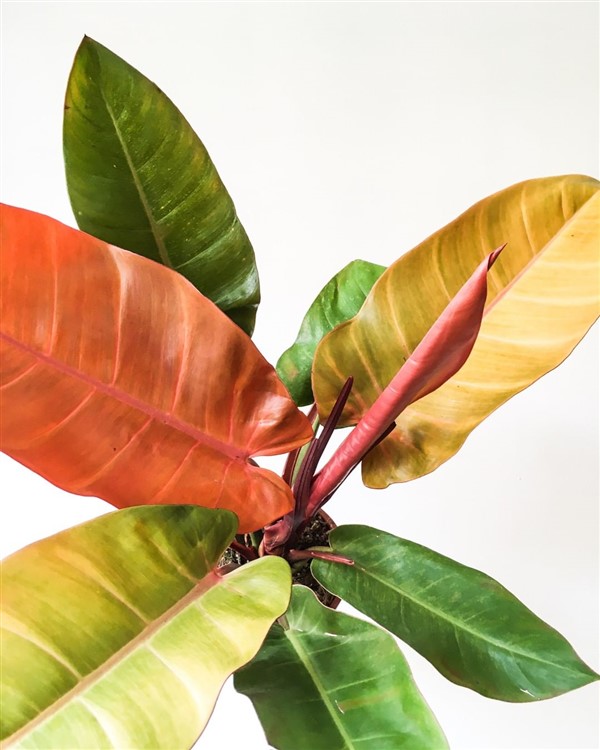
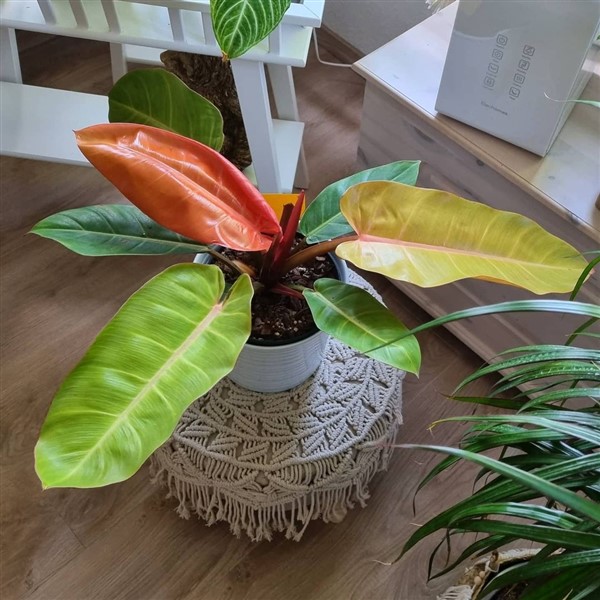
The Prince of Orange is a developed hybrid with a bright display from the renowned Philodendron genus. The plant is frequently used as a houseplant, but it can also be cultivated in the garden. It is an attractive plant due to its colored foliage, just like Heart of Jesus.


General Information
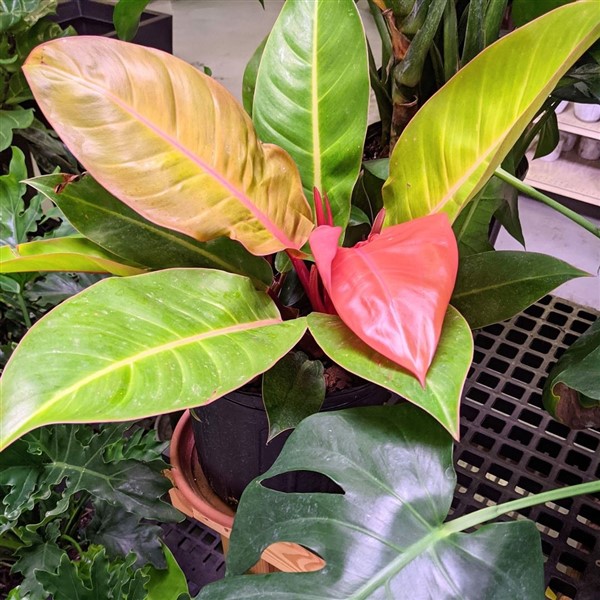
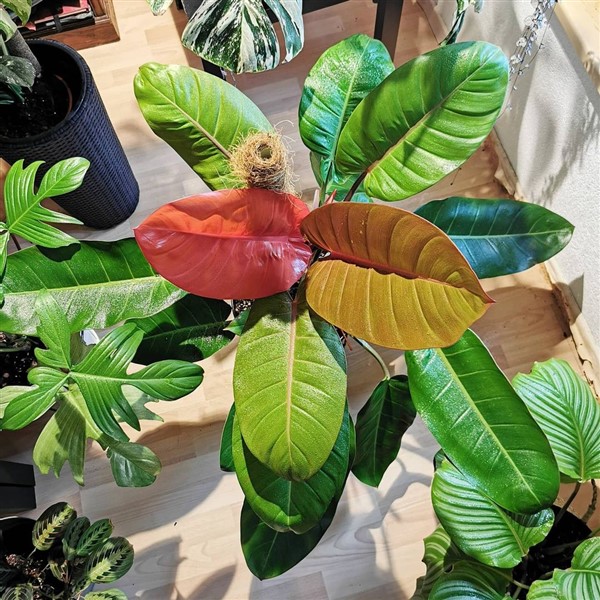
The Philodendron Prince of Orange, also known as “Orange Prince” is an easy-care plant that has stunning glossy bright orange leaves that slowly turn to green as it matures. Therefore the plant will be showing off multiple shades of salmon, orange, and green. Each new leaf develops from the plant’s center since it is self-heading. Expect older leaves to die and fall off as new growth emerges.
Although this houseplant is a manmade hybrid of Philodendron hybrid, it comes from a lengthy pedigree of philodendrons. The philodendron genus is native to Central and South America and belongs to the Aroid family. They are usually ground-level rainforest plants that are shaded by the canopy above them in the wild. However, this attractive philodendron hybrid will not climb, unlike its tree-dwelling relatives.
This plant does not flower easily, but when it does, the flower has a white spadix with a pink to red spathe. Flowers may last four weeks or longer. It is also a perennial and can reach 24 to 36 inches or 60 to 90 cm in height as a mature plant. Unfortunately, the ingestion of plant material from philodendrons is harmful to cats, dogs, and humans since the plant contains calcium oxalate crystals, which have been shown to irritate the skin and mouth.

How to Care for Philodendron Prince of Orange
Sunlight: The plant can handle lower light levels but its leaves will keep their color better in bright light. Keep your philodendron plant in a bright spot, but not in direct sunlight, since this will scorch its glossy leaves. It also grows well in fluorescent light, making it an ideal office plant.
While it’s natural for older leaves to turn yellow, if multiple leaves turn yellow at once, the plant may be exposed to too much light. In that case, relocate the plant. Also, do not forget to rotate your plant on a regular basis to guarantee even growth on all sides!
Watering: It is ideal if you water thoroughly, then let its surface dry out before watering again. Inserting your index finger into the soil, which is about an inch long from the first knuckle, is a good technique to evaluate the moisture level of the soil. Droopy leaves indicate that the plant is either receiving too much or too little water. But don’t worry! When the watering schedule is corrected, the leaves immediately recover.
In the winter, when growth is slower, water sparingly but don’t let the potting medium dry out completely. Do not forget to use tepid water for your plant since cold water is a shock to plants like these that love warmth.
Humidity: It is better if you maintain a relative humidity level of 50% or higher. However, during winter, indoor air can become really dry for your plant. The browning of leaf tips is a sign of dry air. Setting a cool-mist room humidifier near your tropical plant is the most efficient technique to increase indoor humidity. Putting houseplants together or using a pebble tray also helps!
Temperature: Average to warm room temperatures, 70-85 degrees Fahrenheit or 21-29 degrees Celcius, is suitable for this plant. But you should keep Orange Prince away from cold air coming from windows, doorways, AC vents, etc. It can only withstand temperatures as low as 60°F, or 16°C.
Soil Type: Philodendrons in general, thrive in soil that is loose, well-drained, and abundant in organic matter. For good drainage, use a peat moss-based mix with perlite or vermiculite added.
Fertilizer: The plant’s slow growth and small leaf size are signs that it isn’t getting enough fertilizer. Pale new leaves are usually an indication that the plant is lacking in calcium and magnesium, both of which are important micronutrients for philodendrons. Therefore, from spring until fall, feed your plant with a balanced liquid that contains macro-nutrients or water-soluble houseplant fertilizer monthly. During the winter, when development is slower, you can feed every two months.
Propagation: You can propagate it via cuttings. The ideal time to propagate is during the warm days of spring and summer. You can either cut the stem and plant in moist soil or you can dip a cutting in a glass of water. Then, change the water every 2 days until the roots develop, after all, you are ready to transfer it to soil!
Common Problems
This plant is not generally prone to pests and insects, although they can be susceptible to aphids, mealybugs, and fungus gnats at times. If the new leaves are yellow speckled and crinkled, you are dealing with aphids. On the other hand, overwatering and wet soil due to lack of drainage can attract fungus gnats.
Suggestions for problems
Mealybugs: Mealybugs can be easily removed using a cotton ball dipped in rubbing alcohol. This is a safe alternative to using a pesticide.
Aphids: Aphids are sap-sucking insects that choose to attack soft, new growth on plants that are usually outdoors, but if you clean the leaves with tepid water and treat your plant with insecticidal soap, Philodendrons seem to easily shrug off these bugs.
Fungus Gnats: If you stop overwatering and choose to report, this will help you during your battle with fungus gnats. Later, you can use sticky traps to get rid of the adult ones and neem oil to kill the larvae.
In general, to keep pests at bay, spray your plant with water and insecticidal soap on a regular basis. Now you are ready to enjoy your perfectly healthy Philodendron Prince of Orange!